Get Healthy!
- Posted May 28, 2026
Wearable Ultrasound Patch Monitors High-Risk Pregnancies In Real Time
A new ultrasound patch can help save high-risk pregnancies, by continuously monitoring blood flow through the fetus and umbilical cord, according to a new study.
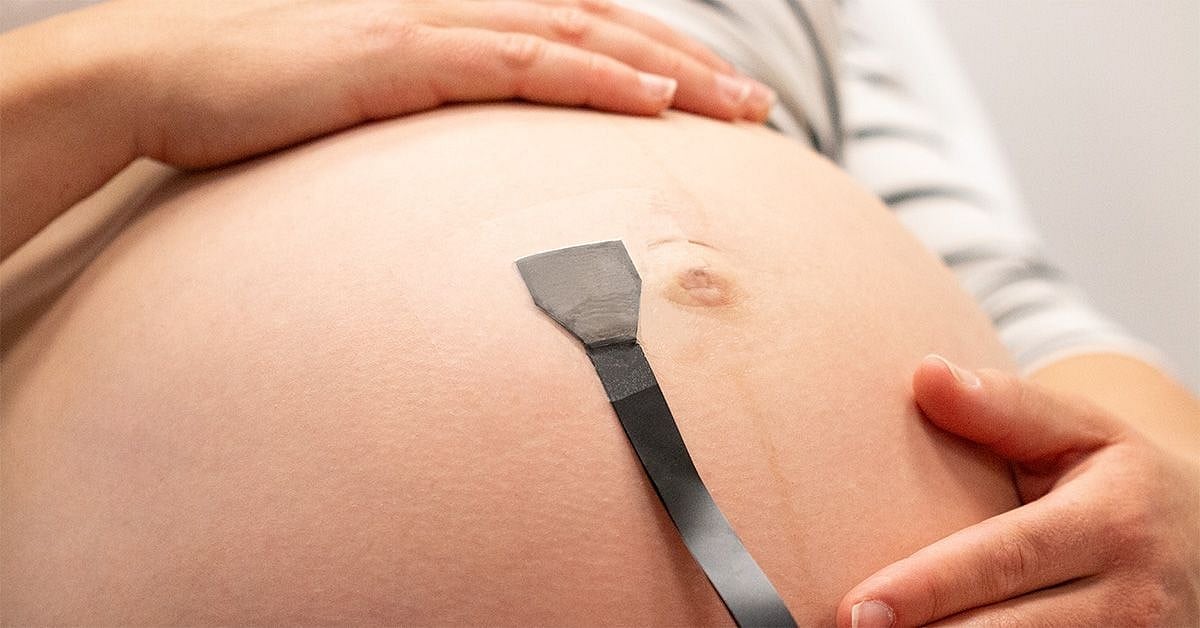
The flexible patch adheres to the abdomen and feeds ultrasound data to a computer through an attached cable, researchers said.
Tests on 62 pregnant women showed that the patch works at least as well as standard ultrasound devices, researchers reported May 26 in the journal Nature Biotechnology.
In at least one instance, the experimental device helped save a pregnancy.
“She was 28 weeks along in her pregnancy — still pretty early on — and an initial examination showed a normal fetal heart rate. Then I saw that the flow signal was quite abnormal,” study co-author Geonho (Tom) Park said in a news release. Park is a postdoctoral scholar in anesthesiology, perioperative and pain medicine at Stanford University School of Medicine in California.
The ultrasound data showed large fluctuations in blood flow through the umbilical cord, a sign of potential trouble in the pregnancy. Normally, blood flow is stable at that point in a healthy pregnancy.
“I thought, ‘Perhaps there’s something malfunctioning in the device,’ so I checked everything, but it seemed like the device was fine. I showed the data to the physicians who were there, and they agreed that the fetus might be in jeopardy,” Park added.
Follow-up testing confirmed that something had gone wrong with the patient’s placenta – the temporary organ inside the uterus that supports the growth of a fetus.
The baby was delivered by C-section four days later, and did well after receiving care in a neonatal intensive care unit, researchers said.
“Wearable ultrasound technology has the potential to enable continuous prenatal monitoring and improve pregnancy outcomes in ways that were previously not possible,” Park said.
Currently, most prenatal ultrasounds can only provide brief snapshots and require trained professionals to operate the equipment.
“To comprehensively monitor mothers and babies over the amount of time needed to catch complications like preeclampsia, you need a system that can work continuously and largely on its own,” said researcher Yizhou Bian, a doctoral student at the University of California-San Diego.
The patch captures images of all three of the major blood vessels in the umbilical cord, which include two arteries and a vein. It also measures blood flow through a major artery in the fetus, and can track the size of the fetus’s head, abdomen and leg length to help estimate fetal weight.
To provide a continual picture, the ultrasound patch must track the fetus and umbilical cord even as they move inside an expecting mom. Algorithms automatically identify and follow the umbilical cord, maintaining constant measurements even when the mom or fetus changes position.
“We thought, ‘What if we target the ultrasound device onto the placenta, in the area where the umbilical cord attaches?’ ” Park said. “Even though everything is moving, there is some stability in the umbilical cord at that location.”
Researchers are now working to further validate the patch’s effectiveness.
“Umbilical artery blood flow is one of the components we look at closely when we’re concerned about fetal well-being in cases of placental insufficiency,” said Dr. Jane Chueh, a high-risk obstetrician at Stanford Medicine who will collaborate with the research team on further validation of the technology.
“Right now, for these high-risk pregnant patients, it can be hard for physicians to get the information we want, right when we need it,” Chueh said in the release. “I think this device will be able to give us that information much more easily.”
More information
Johns Hopkins Medicine has more about fetal ultrasound.
SOURCES: University of California - San Diego, news release, May 26, 2026; Stanford University, news release, May 26, 2026
